THE END OF SPECIES 499
Tuesday afternoon turned into a freaky, unanticipated, climate-change snow-day in Southern California; instead of hot and sunny like it was supposed to be; and was the primary reason space mogul Johann Meyer picked it for one of his three corporate headquarters. But in the early years of the 22nd-century weather predictions were always unreliable, no matter how rich one was.
Johann stared out the wall to wall window in his executive boardroom and watched tiny snowflakes fall through the thin air. David heard him grumble under his breath; “It was supposed to be balmy, like back home in London.”
The conference room was about ten degrees too cold. Johann, without a word, left the protracted and tedious presentation by standing and walking out. Johann didn’t ring his little bell, so the CFO refrained from pausing his talk or looking at the back of his boss. The Board-of-Directors could hear him speaking in a raised voice to the receptionist down the hall.
“Miss, is the heating in my building broken, or is there some reason I’m expected to freeze my arse off?”
Unfazed, the receptionist, without leaving her chair, glided over to the thermostat and turned it up. The blower came back online with a burst of warm air. She rolled back to her desk without looking at Johann.
His pilot, driver, and occasional drinking buddy, David Dansky, noted Johann was out of sorts more than normal today; but he kept it to himself. Johann wasn’t fond of being called out in front of the Board despite being notorious for doing it to everyone else.
Johann came back and sat at the head of the conference table as if nothing had happened and fiddled with the top of his bell. The CFO stopped abruptly to see if he was going to ring it; Johann motioned for him to continue.
Most people disliked Johann immediately. David knew that fact was lost on his friend and mentor—a different person lived under the arrogant, entitled demeanor. David was the pilot Johann sent to an imploding, war-torn China with food, and the one Johann paid to perform a daring rescue of refugees from the Gulf of Mexico during a hurricane. He knew Johann put a large portion of his enormous wealth into the institute at the University of Washington for the study of life in space, not to mention most of Olivia Rayne’s secret project. Johann was a good guy, but he had a hard time letting other people see it.
David hated these meetings. He twisted his dad’s college ring, a gift from his mom, and did his best to keep his left leg from bouncing. He was never sure why Johann demanded he join meetings he had no hope of contributing to. He was a pilot and chauffeur, not a businessman. He had zero ambition in that line of work. He would choose to work on his motorcycle, covered in grease, over being stuck in this suit in a conference room all day.
But Johann insisted on keeping him nearby, a friendly face in an unfriendly world. People said they looked like brothers with their black hair and blue eyes, or father and son, which people whispered behind Johann’s back, unaware that only fifteen years separated them. A life of difficult decisions and little sleep put additional years on Johann’s face.
Today, they were putting the final touches on the Japanese space station proposal. Johann wanted this more than he wanted most things, which was probably why he was in such a foul mood. He was offering a significant chunk of his wealth to get part ownership of the station and the launch facility in Japan—and the current political climate made this the perfect time. The Japanese government and the other spacefaring nations were pulling out of the space race.
Johann owned several launch facilities all over the world and docking rights at most of the space stations. Many of which were empty due to the risk of being shot down after the New American Republic—the NAR—took out Russia’s shiny new space station last year. In fact, the only ones in operation were the Lunar Way Station operated by the Western Alliance and the Japanese station, and those with minimum crews. Johann, being Johann, didn’t seem too concerned about the wars or the pandemic. In his calculation, this was an excellent time to buy because everyone was selling at a deep discount.
The previous twenty years were a struggle for the space industry after the final split between the NAR and the Western Alliance. The history books insisted the break was a surprise, but David couldn’t see how that was possible. From the Health Alliance in the 2020s to the Migration Alliance in the 2030s to the Trade Alliance in 2041, how could the final push be a surprise? Finally, the Western Alliance, a loosely affiliated coalition of the western states and British Columbia, formed after the three-day war ended. He was only eight at the time, but he remembered how scared his mom was.
The NAR disappeared NASA, the Trade Commission, the World Bank, the United Nations, and most of the other government agencies necessary for the success of an international company the rest of the world depended on and making deals like this one harder to pull off, harder to administer, harder to honor.
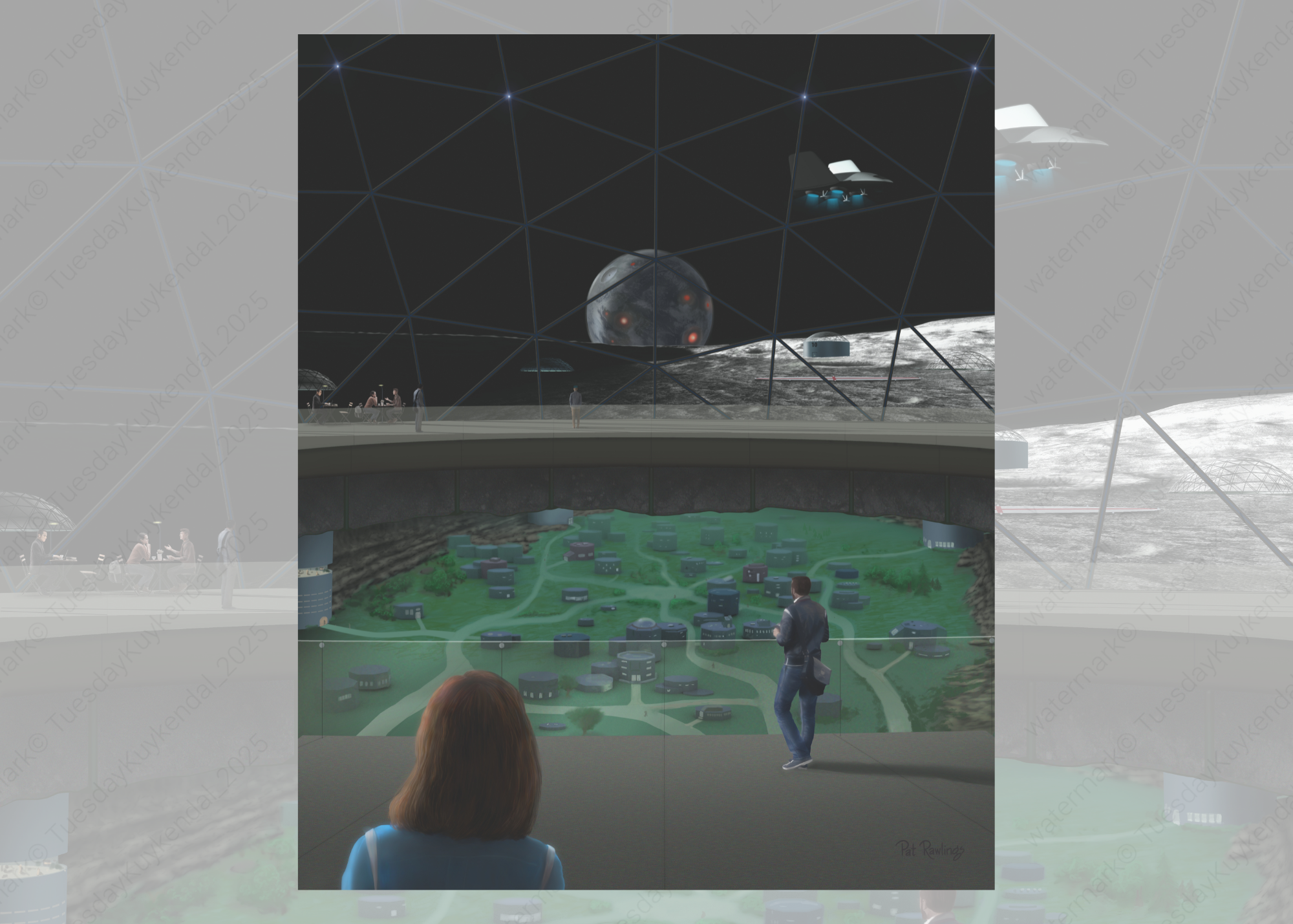
With this meeting, Johann’s ultimate goal was to make deals outside the NAR sphere of control so he could revive the Lunar facilities to their former glory and from there, go to Mars without interference.
The CFO stopped speaking, and Johann waited a moment because the man liked to sprinkle long pauses in his presentations for questions. When he didn’t keep talking, Johann gave his bell a single swing and stood.
“If Mr. Valcore is finished with that riveting financial assessment, Prof. Sato, what do you think? Can we make this work? “
The old Japanese aeronautics professor stood and, with hands pressed gently at his side, took a deep bow. “Mr. Meyer, your proposal is most generous. It is not a decision a man such as myself can make alone. I will bring this to my colleagues and impress upon them the merits of your proposal. I believe they will see as I do the mutual benefit of such a partnership.”
Johann stood and started the obligatory round of bowing, but before the professor could bow back, alarms started clanging. The members all looked down at their devices for a few seconds without speaking. The four members who were attending virtually blinked out of existence and the rest of them ran out of the room and scattered in every direction, leaving Johann and David alone in the conference room.
“The NAR bombed New York City with a nuclear weapon!” The receptionist screamed, and her chair flipped across the linoleum floor as she launched herself out of it and followed the others to the stairs. No one wanted to wait for the lift.
David still insisted on carrying his antique phone. He stared down at it in stunned silence. He couldn’t even think.
“David!” When David still didn’t move, Johann gave him a gentle push on his shoulder to get his attention.
“David,” he said in a soft voice, “we need to get to the chopper. Now.”
David nodded, stood and stumbled out behind Johann and followed him to the roof, mute. Helicopters all over the city were lifting off. Despite New York being thousands of miles away, San Diego was sure to be on the list of cities they wanted to bomb. As they ran to their transport, another alert buzzed on Johann’s device as he pulled the screen out of the shaft.
“Bloody hell! They took out New Jersey at the same time.” Johann said. David ignored him. Energized by an instinct he couldn’t define, he started up the engines and lifted the helicopter off the roof.
“Where are we going, Johann?” he shouted over the noise.
“Seattle.” Johann’s voice was swallowed, but his intent was clear enough. David nodded gravely. He figured that would be the answer. The jet was waiting for them on the San Diego airport tarmac. The crew answered immediately when David contacted them. They would be ready. He hoped they would make it in time.
If you enjoyed this chapter, subscribe to be notified of when it is available:
 Tuesday Kuykendall
You must be logged in to post a comment.